


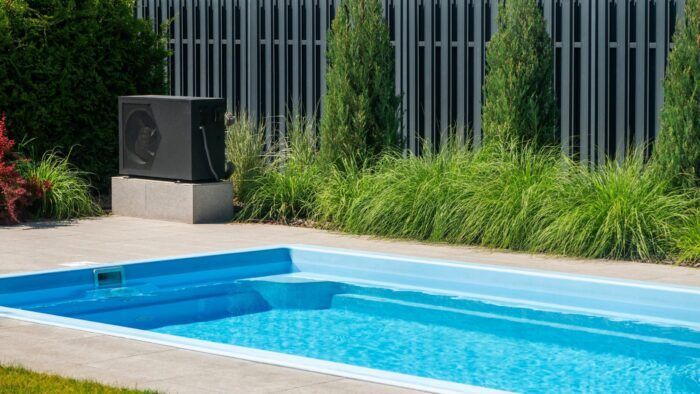
If you have a pool and you are trying to figure out how much the energy cost for a pool heat pump will run you, you are not alone. That question hits you fast the first time your electric bill jumps. You want warm water, but you do not want to throw your whole budget at your swimming pool.
The good news is this is a math problem you can actually win. You can estimate the operating cost for your specific setup, then decide what needs to change. That might be your schedule, your temperature goal, or even the equipment itself.
So let’s walk through it in a practical way. By the end, you will know what you are likely to spend each month and why that number moves. We will look at how to cut expenses without freezing every time you jump in.
Upgrading to one of the modern pool heaters in Montgomery County is a total game-changer if you’re tired of waiting until July for the water to actually feel “inviting” rather than “arctic.”
What People Really Mean By “How Much Energy Cost For Pool Heat Pump”
Most people do not care about technical energy units at first. What they really mean is simple. How much will it add to the power bill each month if I keep my swimming pool at a comfy temperature?
That means there are a few key parts you need to understand:
- The size of your pool
- How warm you want it
- Your local climate
- The electric pool heater type you own
- Other factors like a pool cover, which plays a huge role in retaining that heat
Once those are clear, you can plug rough numbers into a heating cost calculator and then fine tune with real life use.
Heat Pump Basics So The Cost Math Makes Sense
A heat pump pool unit does not create heat from scratch. It works differently than resistance heaters. A heat pump pool system grabs heat from the outside air, runs it through a compressor, and pushes that heat into your pool water.
Because of that, it usually gives more heat than the electrical power it pulls. That is why a pump pool heater is often cheaper to run than a gas heater in mild weather. This efficiency is why operating costs are generally lower. Many pool heat pumps use around 5 kilowatts (kW) per hour for every 100,000 BTUs of heating power.
So How Much Energy Cost For Pool Heat Pump Per Hour And Per Month
Let’s break it into a simple process. First, we figure out your hourly cost, then we stretch that across a normal month of use.
Step 1: Understand kWh And Your Local Rate
Your heat pump draws power in kilowatts. Your utility charges in kilowatt hours (kWh). To find how much you pay per kWh, divide the total energy charge on your bill by the total kWh used.
Step 2: Typical Heat Pump Power Draw
Pool heat pumps do not all pull the same power. Bigger units use more kW but also heat faster.
Common sizes often line up like this:
- A 75,000 BTU pool heat pump typically draws about 3.75 kW of power, making it a suitable option for smaller pools or mild heating needs.
- A 100,000 BTU heat pump generally uses around 5.00 kW and is a common choice for medium-sized pools that require consistent temperature control.
- A 125,000 BTU heat pump usually draws approximately 6.25 kW of power, offering stronger heating performance for larger pools or faster heat-up times.
- A 140,000 BTU heat pump draws about 7.00 kW and is best suited for larger pools or situations where quicker, more powerful heating is needed.
- Step 3: Your Hourly Cost
If your electric rate is $0.18 per kWh and your heat pump uses 5 kW:
Hourly cost = $5 \text{ kW} \times \$0.18 = \$0.90 \text{ per hour}$
Monthly Use Scenarios
- With light use, a pool heat pump typically runs about 2 hours per day, resulting in an estimated monthly cost of around $54.
- For a weekend swimmer, the heat pump generally runs about 4 hours per day, with an estimated monthly cost of approximately $108.
- For those who prefer a consistently warm pool, daily use averages around 6 hours per day, leading to an estimated monthly cost of about $162.
Heat Pump Versus Gas Heater Cost
Maybe you are also debating between a heat pump and a gas unit. Heat pumps usually fall in the $2,000 to $7,000 range, while gas pool heaters often run from $1,500 to $6,000. While gas is cheaper to buy upfront, its operating cost is usually significantly higher. In many climates, gas heaters can cost between $200 and $500 per month, whereas a heat pump typically cruises along at $50 to $150 per month. While the initial investment is higher for a heat pump, the payback period is often just 2 to 4 years due to these massive energy savings.
Practical Ways to Cut Heat Pump Energy Use
- Use A Cover Every Single Night: Heat escapes at the water surface. A basic cover acts like a lid. Using a cover can lower your monthly heating costs from an average of $200 down to $25 to $100.
- Lower Your Target Temperature: Dropping the goal by just 2 to 4 degrees can save a surprising amount of money, as the pump does not have to fight the ambient air as hard.
- Run During Off-Peak Hours: If your utility offers lower rates at night or midday, time your heating cycles to match those windows.
Plan For Maintenance
There is nothing quite like the heartbreak of a “polar plunge” you didn’t sign up for, which is why getting a jump on pool heater repair in Bucks County is a must before your first big summer barbecue.
A heat pump is not “install and forget.” It needs clear airflow and clean coils to stay efficient. If you notice your bills creeping up while your water stays cool, it might be time for a tune up. Proper maintenance helps to make certain your heat exchanger and electrical connections are working at peak performance.