


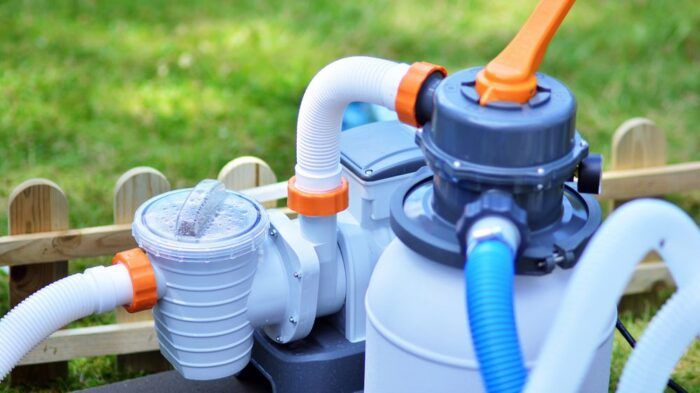
Maintaining crystal clear pool water requires a strategic approach to daily circulation and sanitation management. Within a schedule for pool maintenance in Chalfont, you must manage a delicate balance of filtration and chemical distribution to prevent green water from forming. Many homeowners eventually ask themselves a fundamental question: When is the best time to run a pool filter, and how long should the pool pump stay active?
Running the main pump continuously circulates water through the skimmer baskets and into the pool filtration system for debris removal. This mechanical process distributes liquid chlorine or salt-generated sanitizer evenly while removing microscopic particles that cause cloudy water. If you operate the system at the wrong time, you risk wasting money on expensive utility rates or reducing the overall energy efficiency of your backyard investment.
An effective daily filtration strategy considers both the biological needs of your swimming pool and your specific financial realities. By analyzing peak energy hours and ultraviolet (UV) sunlight exposure, you can optimize your daily run time. This guide, drawing on the professional standards used by the team at Mt. Lake Pool & Patio, explains the exact timing and duration required to keep your swimming pool pristine throughout the year.
The Science of Water Movement: Why Stagnation is the Enemy
Stagnant pool water acts as an ideal breeding ground for dangerous bacteria and invasive green algae spores. When the summer sun beats down on your backyard, it heats the water, accelerating rapid biological growth within the pool equipment and along the liner or plaster surfaces. Your primary circulation pump prevents this dangerous stagnation by constantly forcing water through the sand, DE, or cartridge filter.
During peak summer daylight hours, the sun’s harsh UV rays actively destroy the free chlorine levels in your water. If the water remains completely still, the top layer loses its critical sanitizer protection very rapidly. Circulating the water during the day pulls fresh, chlorinated water from the deep end to the surface.
This continuous mechanical movement protects your significant chemical investment from rapid environmental degradation. To maintain a consistent sanitation barrier against airborne algae spores, active daytime circulation provides the strongest defense. At Mt. Lake Pool & Patio, our experts consistently recommend that the bulk of your filtration occurs when the sun is at its highest point to make sure that the sanitizer is being distributed exactly when it is being depleted most aggressively.
Managing Your Maintenance Schedule: Daytime vs. Nighttime Filtration
Many residential homeowners incorrectly assume they should run their pool equipment exclusively overnight to save money on utility bills. While this strategy addresses the monthly electric bill, it leaves your pool vulnerable during the critical daylight hours when the water is under the most stress.
The Argument for Daytime Operation and Chlorine Efficiency
Your pool experiences the highest demand for active filtration while people are actually swimming. Swimmers introduce sunscreen, sweat, and organic contaminants into the water with every splash. Running the filtration system while the pool is active pulls these contaminants into the skimmer immediately for processing.
Furthermore, active daytime operation effectively combats the aggressive chlorine depletion caused by sunlight. You want your automatic chlorinator or salt cell generating sanitizer while the sun attacks the water. This simultaneous chemical production and mechanical circulation keep your water perfectly balanced throughout the hottest afternoon hours.
The Financial Appeal of Nighttime Filtration
Running a traditional single-speed pump for eight continuous hours during peak daytime rates can become expensive. In regions where electricity costs spike during summer afternoons, switching your timer to midnight capitalizes on the cheapest power available.
However, filtering exclusively at night means the water sits still during the intense afternoon heat. The protective chlorine levels drop by sunset, creating a biological window for algae to bloom. You might save twenty dollars on monthly electricity but end up spending fifty dollars on expensive chemical algaecide treatments later. Finding a middle ground can help you find a balance that protects both your water and your wallet.
Calculating Your Ideal Pool Turnover Rate
Determining the best time to run a pool filter in Bucks County requires knowing your total operational duration. The professional industry standard requires passing the entire volume of your pool water through the filter at least once daily. This is commonly referred to as the pool turnover rate.
Do you know exactly how many gallons your swimming pool holds? Most standard backyard pools hold between 10,000 and 20,000 gallons. An average residential pump moves roughly 50 to 60 gallons of water per minute (GPM) during standard operation. By finding your specific pump’s flow rate and your pool’s total volume, you can calculate the exact required hours.
How to Calculate Your Required Run Time
- Determine Your Total Pool Volume: Measure the length, width, and average depth of your pool. Multiply these (L x W x Avg Depth) and then multiply the result by 7.5 to find the total gallons.
- Identify Your Pump Flow Rate: Inspect the manufacturer plate on the side of your pump motor housing for the GPM rating.
- Calculate the Turnover Time: Divide your total pool volume by your GPM to get the total minutes, then divide by 60 to determine the daily hours required.
Splitting the Cycles: A More Efficient Approach
Running your heavy equipment for eight consecutive hours is rarely the most efficient approach. A single eight-hour block leaves the water stagnant for the remaining sixteen hours, allowing debris to settle and inviting insects to the surface.
Instead, try breaking the total run time into multiple shorter cycles. You can program your timer to run for four hours in the early morning and another four hours during the hottest part of the late afternoon. This split schedule prevents the water from sitting still for too long. An advanced strategy involves running the system during the hottest daytime parts and briefly during the night to keep the surface clear.
Never turn off your pump immediately after adding pool shock. Concentrated chemicals need at least two to four hours of active circulation to dissolve properly and avoid bleaching or damaging the pool liner.
Environmental Factors and Weather Influences
Your filtration needs will fluctuate based on seasonal weather patterns. During a heatwave, algae reproduces at a significantly faster rate, necessitating an increase in daily run time. Similarly, heavy rainstorms introduce phosphates, nitrogen, and dirt directly into the pool. This sudden influx of organic matter creates an immediate demand for filtration. After a severe storm, it is often wise to run the equipment continuously for 24 hours to clear the water.
The physical landscape also plays a role. Large trees drop leaves, pollen, and seeds onto the water surface. Running the skimmer during breezy afternoons captures this floating debris before it sinks to the bottom, where it becomes much harder to remove. Mt. Lake Pool & Patio offers a variety of specialized skimmer and filtration upgrades that can make this process even more efficient for properties with heavy foliage.
Winter Maintenance and Off-Season Adjustments
Winter brings cooler temperatures that naturally slow down bacterial growth. In regions with mild winters where the pool stays open, you can safely cut your daily pump run time in half during December and January. The winter sun sits lower in the sky, reducing UV impact on chlorine, and the lack of swimmers eliminates the introduction of organic contaminants.
However, freezing temperatures present a different set of rules. If the air temperature drops below 32°F (0°C), the water in your PVC pipes can freeze, leading to catastrophic plumbing damage. During a freeze warning, you must run the pump continuously to keep the water moving, as moving water is much harder to freeze.
The Advantage of Variable Speed Technology
Modern technology has fundamentally changed the conversation around filtration timing. A variable speed pool pump allows you to adjust the motor’s RPM based on the task. This is a primary area of expertise for the technicians at Mt. Lake Pool & Patio, who can help homeowners transition from outdated, energy-hungry models to modern, smart systems.
A variable speed motor running at a low speed consumes dramatically less electricity than standard models. You can run these systems for 12 or even 24 hours a day on a low setting for mere pennies. This constant circulation keeps the pool perfectly clear and highly sanitized. You simply program a high-speed cycle during peak swimming hours to power the surface skimmers, then allow the pump to drop to a low, energy-efficient speed for the remainder of the day.
Final Thoughts on Filtration Timing
Maintaining a crystal clear pool requires strategic timing and consistent execution. The science favors daytime circulation to combat UV degradation and active swimmer load. While nighttime operation offers slight utility savings, it increases the risk of algae blooms that are far more expensive to treat than the electricity saved.
By understanding your equipment’s flow rate and utilizing the specialized advice of professionals, you can establish a baseline that keeps your water healthy. Monitor your water clarity closely and adjust your timer until you find the perfect rhythm for your specific environment. A well-planned schedule reduces chemical dependency, lowers long-term costs, and makes sure your backyard oasis is always ready for a swim. Contact Mt. Lake Pool & Patio today to get started.