


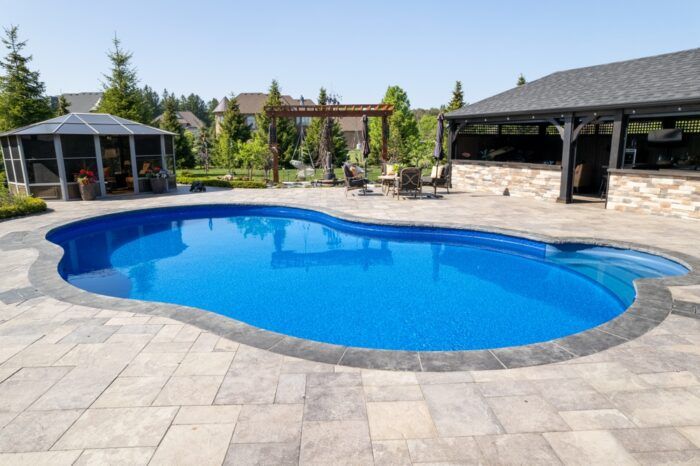
A saltwater pool is still a chlorine pool. The only real difference is how the chlorine gets into the water: a salt chlorine generator splits dissolved salt into sanitizer on site, while a traditional system relies on tabs, liquid, or granular chlorine added by hand. That single distinction drives every other comparison homeowners ask Bucks County pool companies about, from upfront conversion cost to how the water feels on skin in late August.
How Salt Chlorine Generators Produce Sanitizer
A salt system holds roughly 3,000 to 3,500 parts per million of dissolved salt, about a tenth of ocean salinity and close to the salt level of human tears. Pool water passes through a cell containing titanium plates, and a low-voltage current converts chloride ions into hypochlorous acid, the same active sanitizer produced by a chlorine tablet.
Once the chlorine does its work, it reverts to chloride and cycles through the cell again. The salt itself is not consumed, so topping off usually happens only after heavy rain, backwashing, or a spring opening that follows a winter of dilution.
Traditional systems depend on a chemical feeder, floater, or manual dosing. Stabilized trichlor tablets dissolve slowly and add cyanuric acid with every dose, which matters more than most owners realize after three or four seasons.
Upfront Conversion Costs in Bucks and Montgomery Counties
Converting an existing pool is largely an equipment purchase, not a construction project. Most installations in Doylestown, Newtown, and Yardley are completed in a single visit, assuming the electrical panel at the equipment pad has capacity.
- Salt chlorine generator and control board: typically $2,500 to $4,000 installed for a residential pool up to 25,000 gallons, depending on cell size and whether the unit integrates with existing automation.
- Initial salt load: about 10 to 14 bags of pool-grade salt for a 20,000-gallon pool, at roughly $9 to $14 per 40-pound bag.
- Electrical work: $200 to $600 if a dedicated circuit or bonding correction is required to meet code.
- Sacrificial zinc anode: $40 to $120, inexpensive insurance against galvanic corrosion on metal components.
Going the other direction costs almost nothing. Switching a salt pool back to manual chlorine simply means turning the generator off and letting salinity drop through normal water replacement, though the salt will linger for a season or two.
What Each System Costs Across a Pennsylvania Season
Southeastern Pennsylvania runs a short season, generally late April through early October, which limits annual chemical spending compared with year-round climates. Tab prices have stayed higher since the 2020 supply disruption, and that gap is the main reason conversions keep coming up in conversation.
A traditional chlorine pool in this region commonly runs $450 to $900 per season in sanitizer alone, before shock, algaecide, and balancers. A salt pool often spends $80 to $200 per season on salt and balancing chemicals, but that figure excludes the cell, which is a consumable.
Salt cells last about 3 to 7 years, or roughly 8,000 to 10,000 operating hours, and replacements run $450 to $900. Spread across the lifespan, a salt system usually saves money, though the savings are modest rather than dramatic.
The Testing Routine Changes More Than the Workload
Salt systems reduce handling of chemicals, yet they do not eliminate water testing. Chlorine generators are highly sensitive to pH drift, because electrolysis produces a byproduct that pushes pH upward over time.
Owners of salt pools in Bensalem and Warrington typically add muriatic acid more frequently than their neighbors with tablet feeders, sometimes weekly during peak heat. Meanwhile, trichlor tablets push pH down and stack cyanuric acid, which eventually locks up chlorine effectiveness and forces a partial drain.
Both systems require the same core balance targets: pH between 7.2 and 7.6, total alkalinity near 80 to 120 ppm, and calcium hardness between 200 and 400 ppm for plaster surfaces. The CDC’s healthy swimming guidance notes that free chlorine and pH control are what actually prevent recreational water illness, regardless of how the chlorine is generated.
Skin, Eyes, and the Comfort Argument
The comfort advantage of saltwater is real but frequently misattributed. Soft, less irritating water comes from consistently low chloramine levels, not from the salt itself.
Because a generator produces chlorine continuously at a steady rate, salt pools tend to avoid the spikes and valleys of tablet dosing that create the heavy chemical smell at the water line. That smell is chloramines, a sign of used-up chlorine rather than too much of it.
Swimmers with sensitive skin, eczema, or reactive eyes usually report a noticeable difference after conversion. Families in Horsham and Lansdale often cite this as the deciding factor well ahead of cost.
Corrosion Risk on Coping, Heaters, and Hardware
Salt accelerates galvanic corrosion, and this is where Bucks County construction details matter. Many pools built here use natural flagstone or limestone coping, mortar joints, and aluminum or steel handrails, all of which react to prolonged salt exposure and repeated splash-out.
- Natural stone coping and mortar: salt crystallization can cause spalling and white efflorescence, particularly on porous stone that was never sealed.
- Heater headers: cupronickel heat exchangers hold up well; standard copper models degrade faster in salt environments.
- Light rings, ladders and rails: stainless steel grades below 316 pit over time, especially where water sits after use.
- Automatic covers and fasteners: hardware should be rinsed periodically to prevent buildup at the track.
None of this rules out a conversion. It does mean a sealed coping surface, a zinc anode, and a cupronickel heater should be part of the plan rather than an afterthought.
Which Pools Make Good Conversion Candidates
Vinyl liner pools convert easily, since the liner is unaffected by salinity and the only metal exposure is at the wall panels and faceplates. Fiberglass pools are similarly straightforward and are arguably the best match for salt chemistry.
Gunite pools with plaster finishes convert well too, provided calcium hardness stays in range so the water does not pull calcium from the shell. If your pool has older copper heaters, unsealed limestone decks, or galvanized components, it is smart to start with an equipment audit, a routine check you can request from any trusted pool company in Montgomery County that homeowners rely on for seasonal openings and closings.
Closing procedures also differ slightly. Salt cells should be removed, inspected, and stored indoors each fall, which takes about ten minutes and protects a part worth several hundred dollars.
Frequently Asked Questions
How Much Does It Cost to Convert a Pool to Saltwater?
Most conversions in Bucks County run $1,700 to $4,200 all in, including the generator, installation, initial salt, and any required electrical work. Larger pools over 30,000 gallons or systems that integrate with existing automation sit at the upper end of that range.
Is a Saltwater Pool Cheaper to Maintain?
Salt pools typically save $300 to $700 per season in sanitizer costs, though cell replacement every 3 to 7 years offsets part of that. Over a ten-year window, the two systems usually land within a few hundred dollars of each other, so comfort and convenience often matter more than the math.
Does Saltwater Damage Pool Equipment and Stone Decks?
Salt at 3,200 ppm accelerates corrosion on copper heat exchangers, low-grade stainless, and unsealed natural stone, but sealed coping and a sacrificial zinc anode address most of the risk. Rinsing handrails and deck stone a few times each season helps considerably.
Can a Saltwater Pool Still Get Algae?
Yes, salt pools develop algae whenever free chlorine drops below about 2 ppm or stabilizer levels fall too low to protect chlorine from sunlight. Generators have an output ceiling, so extended heat waves and heavy bather loads sometimes require supplemental liquid chlorine.
How Long Does a Salt Cell Last?
A properly sized cell lasts roughly 8,000 to 10,000 hours of operation, which works out to 3 to 7 seasons in Pennsylvania. Scale buildup from high calcium or high pH shortens that lifespan, so periodic inspection and mild acid cleaning extend the return on the part.
Talk Through a Conversion With Mt Lake Pool & Patio
Ready to find the right solution for your pool? Contact our team at Mt Lake Pool & Patio to talk through a conversion. The ideal answer depends on your pool’s finish, heater, coping material, and how your family swims. Our experts evaluate your existing equipment across Bucks and Montgomery counties to give you a straight cost comparison before anything is ordered.